Micro-reporting on Twitter during Operation Cast Lead
During Israel’s Operation Cast Lead in Gaza in December 2008 to January of 2009, we realized that the traditional broadcast cycle was too slow for the speed of the conflict and as a result started "Micro Reporting.”
During Israel’s Operation Cast Lead in Gaza in December 2008 to January of 2009, we realized that the traditional broadcast cycle was too slow for the speed of the conflict and as a result started "Micro Reporting.” Because Western media outlets were largely restricted from entering the Gaza Strip, Al Jazeera held a distinct advantage with teams already positioned on the ground. We launched the dedicated Twitter channel @ajgaza to serve as a real-time wire service, bypassing the heavy production of TV news to deliver the pulse of the war directly to the global community.
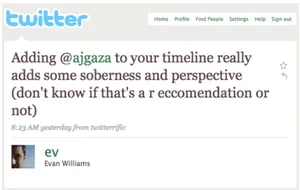
The immediacy was jarring. We took raw updates from our correspondents in Gaza City, Ayman Mohyeldin and Sherine Tadros, and compressed the chaos of the front lines into the disciplined 140-character limit of the era. Every update was a snapshot of the atmosphere: from Ayman reporting on Israeli naval vessels firing in the morning to Shireen describing twenty minutes of "almost constant" aerial bombardment. By forcing the news into these micro-bursts, we provided what Twitter co-founder Evan Williams described as necessary "soberness and perspective" to the digital world.
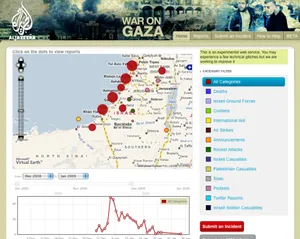
To ground this "Twitter torrent" in physical reality, we integrated these reports with Ushahidi, a mapping program launched in 2008 that consolidated citizen-generated data. This went far beyond simple social media posting; it was a rigorous exercise in verification where we sought to turn fragmented data, sent via mobile phones, email, and web, into a verified record of incidents. While the mapping functionality was an experimental "BETA" project that occasionally faced technical glitches, it allowed us to categorize deaths, air strikes, and civilian casualties with geographical precision.